Home » Blog » When School Worries Become More Than Just ButterfliesWhen School Worries Become More Than Just Butterflies Helping Kids Thrive This School YearAugust 19, 2026 | Series 2 of 8A new school year can bring a mix of excitement and nerves. New teachers,...
Healthy Sleep Habits: One of the Best Ways to Help Your Child Succeed

As families prepare for a new school year, it’s easy to focus on school supplies, new teachers, and busy schedules. One of the most important ways to help your child start the year strong, however, begins before the first morning alarm: getting enough sleep.
Quality sleep plays a critical role in a child’s mental and physical well-being. It supports learning, memory, attention, emotional regulation, and overall mood. Children who get enough sleep are often better able to concentrate in class, manage stress, and navigate the challenges that come with a new school year.
How Much Sleep Does Your Child Need?Sleep needs change as children grow, and getting the right amount of rest is essential for learning, emotional well-being, and overall health. The recommendations shown here can help you determine whether your child is getting enough sleep for their age. | 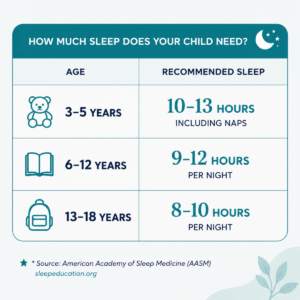 |
Building Healthy Sleep Habits
Creating a consistent bedtime routine doesn’t have to be complicated. A few small habits can make a big difference:
- Keep bedtimes and wake-up times as consistent as possible, even on weekends.
- Limit screens for at least an hour before bedtime.
- Create a calm, quiet sleep environment that’s cool and comfortable.
- Encourage relaxing activities before bed, such as reading or listening to calming music.
- Avoid caffeine and sugary drinks later in the day.
Remember, every child is different. Finding a routine that works for your family is more important than striving for perfection.
When Sleep Problems May Be Something More
Occasional restless nights are normal, especially during times of change. But if your child regularly struggles to fall asleep, wakes frequently during the night, or seems tired, irritable, or anxious throughout the day, it may be worth taking a closer look.
Sleep challenges can sometimes be connected to anxiety, ADHD, depression, or other mental health concerns. Addressing the underlying cause, rather than just the bedtime routine, can make a meaningful difference.
We’re Here to Help
Healthy sleep is one of the building blocks of emotional wellness, but ongoing sleep difficulties can sometimes be a sign of something more. If your child is struggling with sleep, anxiety, attention, or emotional regulation, Orchard Mental Health Group is here to help. Our therapists and medication management providers work with children, teens, and families to provide compassionate, personalized care that supports long-term well-being.
🍎 Helping Kids Thrive This School Year
This article is part of Orchard Mental Health Group’s Helping Kids Thrive This School Year seasonal wellness series, designed to provide practical, compassionate guidance for parents as children and teens navigate the school year.
Coming Next Week: When Back-to-School Worries Become More Than Just Butterflies
Follow us for more wellness content!
More Blog Posts
When School Worries Become More Than Just Butterflies
read more

How Do I Know If Therapy Is Right for Me?
Home » Blog » How Do I Know If Therapy Is Right for Me?Let's Talk About Therapy Real Questions. Honest Answers. August 17, 2026 | Series 2One of the most common questions we hear is: "How do I know if therapy is right for me?" It's a fair question, and one that...

Healthy Sleep Habits: One of the Best Ways to Help Your Child Succeed
Home » Blog » Healthy Sleep Habits: One of the Best Ways to Help Your Child SucceedHealthy Sleep Habits: One of the Best Ways to Help Your Child Succeed Helping Kids Thrive This School Year August 10, 2026 | Series 1 of 8As families prepare for a new school year, it's...
In crisis or need immediate help?
Call 988 or go to your nearest ER.
Services
Adolescent Psychotherapy
Adult Psychotherapy
Assessments & Evaluation
Child Psychotherapy
Cognitive Behavioral Therapy
Couples Therapy
Family Therapy & Parent Coaching
Genetic Testing
Group Therapy
Medication Management
Play Therapy
Single-Session Therapy
Teletherapy
Orchard Mental Health Group
Accepted Insurance*
Aetna
Carefirst / Blue Cross Blue Shield
Cigna
Humana / Tricare
Johns Hopkins Health Plans
Medicaid
Medicare
Optum / UnitedHealthcare
*Varies by service
Partner Resources
Contact Us
M-F, 9am-5pm Eastern Time
Phone: 240-750-6467
Fax: 240-912-7835
contact@orchardmentalhealth.com
9707 Key West Avenue, Suite #100 Rockville, MD 20850