Helping Kids Stay Connected and Confident During Summer Break

Home » Blog » Helping Kids Stay Connected and Confident During Summer Break

Helping Kids Stay Connected and Confident During Summer Break

June 8, 2026 | 3 min. read

Developing Self-Compassion

School provides more than academics. It also gives children daily opportunities to connect with friends, build confidence, and practice social skills.

When summer begins, those connections can become less frequent, leaving some children feeling isolated or disconnected.

Help Children Stay Social

Not every child needs a busy social calendar, but maintaining meaningful connections is important.

Consider:

  • Playdates
  • Camps
  • Sports teams
  • Community programs
  • Family gatherings

Regular social interaction helps children maintain confidence and emotional well-being.

Spend Time Outdoors

Research consistently shows that time outside supports both physical and mental health.

Simple outdoor activities include:

  • Swimming
  • Walking trails
  • Bike rides
  • Playground visits
  • Backyard games

Children don’t need expensive outings to benefit from time outdoors.

Prepare for New Experiences

Many children feel nervous about camps, vacations, or schedule changes.

Talking through upcoming events ahead of time can help.

Ask questions like:

  • What are you excited about?
  • What are you nervous about?
  • What can you do if you feel uncomfortable?

Helping children think through challenges before they happen can increase confidence and reduce anxiety.

Final Thoughts

Summer can be a wonderful opportunity for growth, connection, and fun. By maintaining some structure, encouraging social interaction, and keeping communication open, parents can help children navigate the season with confidence.

If your child is struggling with anxiety, emotional regulation, ADHD, depression, or major life transitions, Orchard Mental Health Group and GBCC Behavioral Health are here to help. Contact us today to learn more about our child and adolescent therapy services.

Explore the full Summer Mental Health Series:

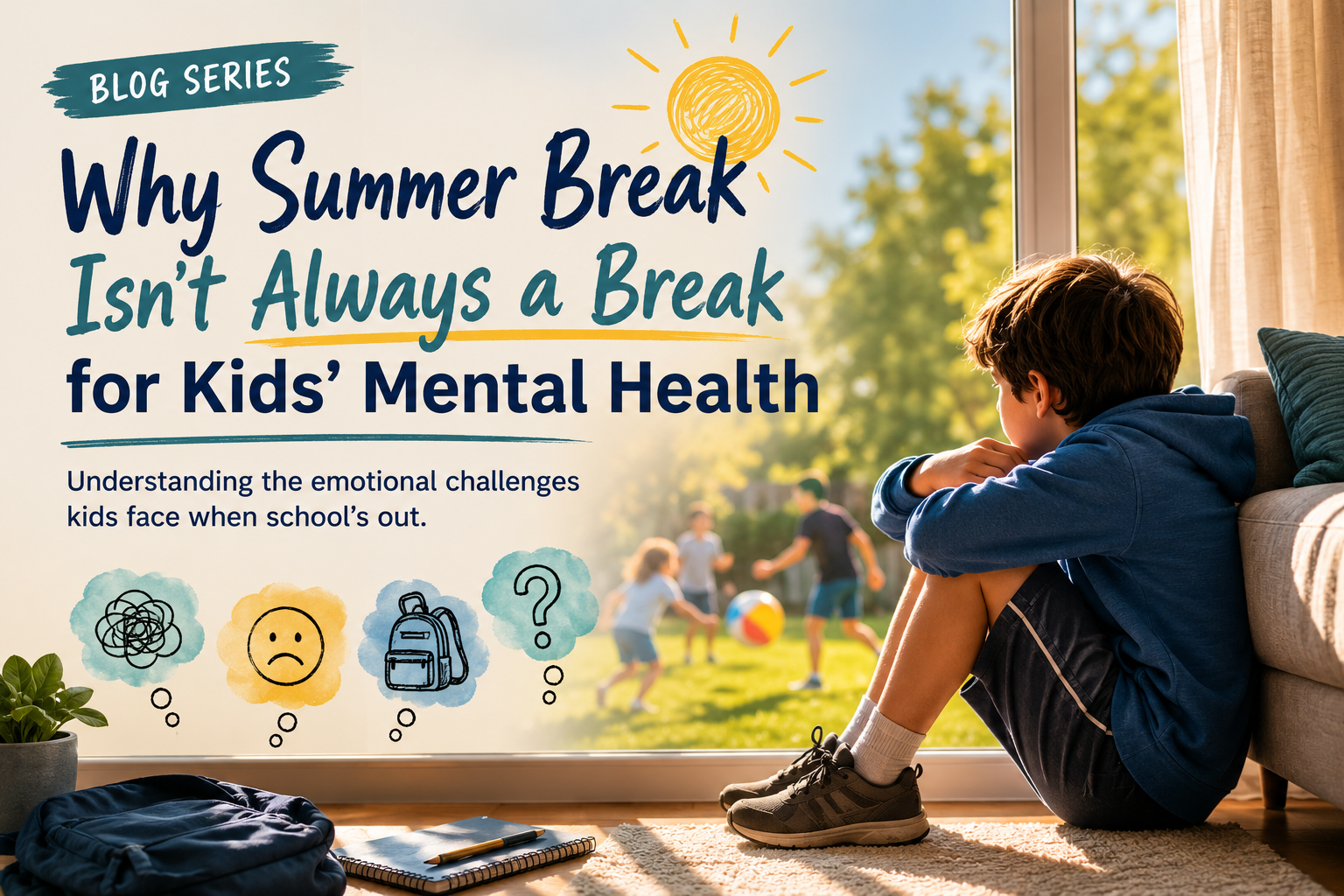
Part 1: Why Summer Break Isn’t Always a Break for Kids’ Mental Health
Part 2: Creating a Healthy Summer Routine for Your Child
Part 3: Helping Kids Stay Connected and Confident During Summer Break

Follow us for more wellness content!

More Blog Posts

Creating a Healthy Summer Routine for Your Child

Creating a Healthy Summer Routine for Your Child

Home » Blog » Creating a Healthy Summer Routine for Your ChildCreating a Healthy Summer Routine for Your Child June 8, 2026 | 3 min. readOne of the biggest adjustments children face during summer break is the loss of routine. While most kids enjoy having fewer...

read more

Creating a Healthy Summer Routine for Your Child

Home » Blog » Creating a Healthy Summer Routine for Your Child

Creating a Healthy Summer Routine for Your Child

June 8, 2026 | 3 min. read

Developing Self-Compassion

One of the biggest adjustments children face during summer break is the loss of routine.

While most kids enjoy having fewer obligations, too much unstructured time can sometimes lead to boredom, irritability, anxiety, and increased screen use.

The good news? Children don’t need a packed calendar to thrive. A simple routine can provide the balance many kids need.

Keep Some Structure in Place

Summer shouldn’t feel like school, but maintaining a predictable rhythm can help children feel secure.

Consider:

  • Consistent bedtimes and wake-up times
  • Regular meal schedules
  • Planned activity time and downtime

Children often do best when they know what to expect from their day.

Encourage Learning Without Making It Feel Like School

Summer is a great time to explore interests and keep minds engaged.

Ideas include:

  • Visiting the library
  • Reading together
  • Science experiments
  • Museum visits
  • Creative projects

The goal is curiosity, not homework.

Be Mindful of Screen Time

For many families, screen time naturally increases during the summer.

Rather than focusing only on limits, try creating alternatives:

  • Outdoor play
  • Crafts
  • Family board games
  • Reading challenges
  • Hobbies and special projects

Giving children engaging options often works better than simply taking devices away.

Looking Ahead

In Part 3, we’ll discuss the importance of friendships, outdoor activities, and helping children prepare for summer transitions like camps, vacations, and new experiences.

Need support for your child or teen? Contact Orchard Mental Health Group or GBCC Behavioral Health to learn more about our child and adolescent therapy services.

Missed Part 1? Read: Why Summer Break Isn’t Always a Break for Kids’ Mental Health

Continue to Part 3: Helping Kids Stay Connected and Confident During Summer Break

Follow us for more wellness content!

More Blog Posts

Creating a Healthy Summer Routine for Your Child

Creating a Healthy Summer Routine for Your Child

Home » Blog » Creating a Healthy Summer Routine for Your ChildCreating a Healthy Summer Routine for Your Child June 8, 2026 | 3 min. readOne of the biggest adjustments children face during summer break is the loss of routine. While most kids enjoy having fewer...

read more

Why Summer Break Isn’t Always a Break for Kids’ Mental Health

Home » Blog » Why Summer Break Isn’t Always a Break for Kids’ Mental Health

Why Summer Break Isn’t Always a Break for Kids’ Mental Health

June 8, 2026 | 3 min. read

Developing Self-Compassion

When parents think about summer, they often picture vacations, pool days, and a break from the stress of the school year. But for many children and teens, summer can bring unexpected emotional challenges.

At Orchard Mental Health Group and GBCC Behavioral Health, we often hear from parents who notice changes in their child’s mood shortly after school ends. A child who seemed happy and engaged during the school year may suddenly become irritable, anxious, withdrawn, or bored.

While this can be frustrating, it is often a normal response to a major change in routine.

Why the Transition Can Be Difficult

During the school year, children benefit from:

  • Daily structure
  • Consistent expectations
  • Regular social interaction
  • Mental stimulation
  • Physical activity

When summer arrives, much of that disappears overnight.

Some children adapt quickly, while others struggle with the loss of routine and predictability. Children with anxiety, ADHD, emotional regulation challenges, or difficulty with transitions may be especially affected.

Signs Your Child May Be Struggling

You may notice:

  • Increased irritability
  • More emotional outbursts
  • Anxiety or excessive worry
  • Changes in sleep habits
  • Excessive screen time
  • Withdrawal from friends or activities
  • Frequent complaints of boredom

These behaviors don’t necessarily mean something is wrong, but they can signal that your child needs additional support during the transition.

Looking Ahead

The good news is that small changes can make a big difference. In Part 2 of this series, we’ll share practical ways parents can create healthy routines and support emotional wellness throughout the summer.

Need support for your child or teen? Contact Orchard Mental Health Group or GBCC Behavioral Health to learn more about our child and adolescent therapy services.

This is Part 1 of our Summer Mental Health Series.

Continue reading: Creating a Healthy Summer Routine for Your Child

Follow us for more wellness content!

More Blog Posts

Creating a Healthy Summer Routine for Your Child

Creating a Healthy Summer Routine for Your Child

Home » Blog » Creating a Healthy Summer Routine for Your ChildCreating a Healthy Summer Routine for Your Child June 8, 2026 | 3 min. readOne of the biggest adjustments children face during summer break is the loss of routine. While most kids enjoy having fewer...

read more

Harnessing Brain Plasticity for Kids with ADHD

Home » Blog » Harnessing Brain Plasticity for Kids with ADHD

Harnessing Brain Plasticity for Kids with ADHD

July 16, 2025 | Sasha Hileman, Psy.D. | 4 min. read

Developing Self-Compassion

Parenting a child with ADHD is challenging, but their brain’s plasticity—its ability to rewire—offers hope. As a child psychologist, I share research-backed strategies to leverage neuroplasticity, helping kids with ADHD (5–10% of children) overcome difficulties in attention, impulse control, and hyperactivity.

ADHD involves delayed prefrontal cortex development and dysregulated dopamine, causing distractibility (Journal of Neuroscience, 2017). Yet, childhood is a peak time for plasticity, when neural pathways for focus and self-regulation can be reshaped (Nature Reviews Neuroscience, 2018). Structured routines, like daily checklists, strengthen organization circuits (Journal of Abnormal Child Psychology, 2014). Break tasks into 10–15-minute segments with breaks to build attention (Journal of Attention Disorders, 2017). Use timers to support time management. 

Exercise, like 30 minutes of running, boosts dopamine and focus (Pediatrics, 2016). Positive reinforcement—praising efforts like “Great job starting homework!”—strengthens learning pathways (Clinical Psychology Review, 2009). Limit screens to 1–2 hours daily to avoid overstimulation (Journal of Child Psychology, 2020). Prioritize sleep (9–11 hours) with a tech-free bedtime routine, as poor sleep worsens symptoms (Sleep Medicine Reviews, 2017). Teach 1–2-minute mindfulness exercises, like box breathing, to enhance emotional regulation (Mindfulness, 2019). Validate emotions and role-play social scenarios to build resilience. 

Every routine or reward sculpts your child’s brain for success.

It’s tough, but progress builds over time. Start with one strategy, like a movement break, and consult a psychologist or pediatrician for support. Your efforts now foster a confident, capable future. 

Resources: CHADD, ADDitude Magazine, American Academy of Pediatrics, National Institute of Mental Health.

Follow us for more wellness content!

More Blog Posts

Raising Resilient Kids in a Fragile World

Home » Blog » Raising Resilient Kids in a Fragile World

Raising Resilient Kids in a Fragile World

July 16, 2025 | Sasha Hileman, Psy.D. | 4 min. read

Developing Self-Compassion

Parenting today is challenging, with cultural shifts often undermining kids’ resilience. As a child psychologist inspired by The Coddling of the American Mind by Haidt and Lukianoff, I offer evidence-based strategies to foster your child’s ability to navigate life’s challenges.

Resilience—adapting to stress—grows when kids face manageable setbacks. A 1998 Developmental Psychology study found that overcoming small challenges builds problem-solving skills, while overprotection increases anxiety (Journal of Child Psychology, 2016). Social media amplifies this, with a 2021 JAMA Pediatrics study linking excessive use to heightened emotional sensitivity, especially in teens. “Safetyism,” an obsession with shielding kids from discomfort, discourages risk-taking, weakening neural pathways for adaptability (Nature, 2019).

To build resilience, focus on emotional regulation, social competence, and a growth mindset. Let kids fail safely—like forgetting homework—and discuss lessons learned. Assign chores to boost responsibility and encourage physical risks, like climbing trees, to build confidence. Teach emotional reframing: if they say, “I’m terrible at math,” ask, “What’s one thing you did well?” Model calmness during stress and practice short mindfulness exercises to strengthen emotional skills. Promote free play and group activities like sports to enhance social skills and empathy. Praise effort over outcomes to foster a growth mindset, as Carol Dweck’s 2006 research shows.

Parenting in a world that prioritizes safety over growth is tough. You’re not alone in feeling overwhelmed. Start small: try a device-free playdate or share a story of your own challenges. These steps build kids who thrive amid adversity. For guidance, reach out to a psychologist or counselor.

Resources: The Coddling of the American Mind, American Psychological Association, Mindset Works, National Institute of Mental Health.

Follow us for more wellness content!

More Blog Posts