Will I Still Be Myself When I Take Medication

Home » Blog » Will I Still Be Myself When I Take Medication

Will I Still Be Myself When I Take Medication? Answers to Common Concerns

March 24, 2026 | Sasha Hileman, Psy.D. | 3 min. read

Developing Self-Compassion

If you’re considering medication for mental health – whether anxiety, depression, ADHD, or another condition – you might wonder: “Will I still be me?” It’s a common and understandable concern. Medication affects the brain, and the brain is a big part of who we are. Here’s what psychology and science tell us.

Medication Doesn’t Change Your Core Self

Research shows psychiatric medications generally don’t alter personality. They work by correcting chemical imbalances or helping your brain regulate mood, attention, or stress – not by turning you into someone else. You’ll still have the same humor, values, and quirks. The “you” at your core remains intact – it’s just easier to access.

It Can Help You Be More Yourself

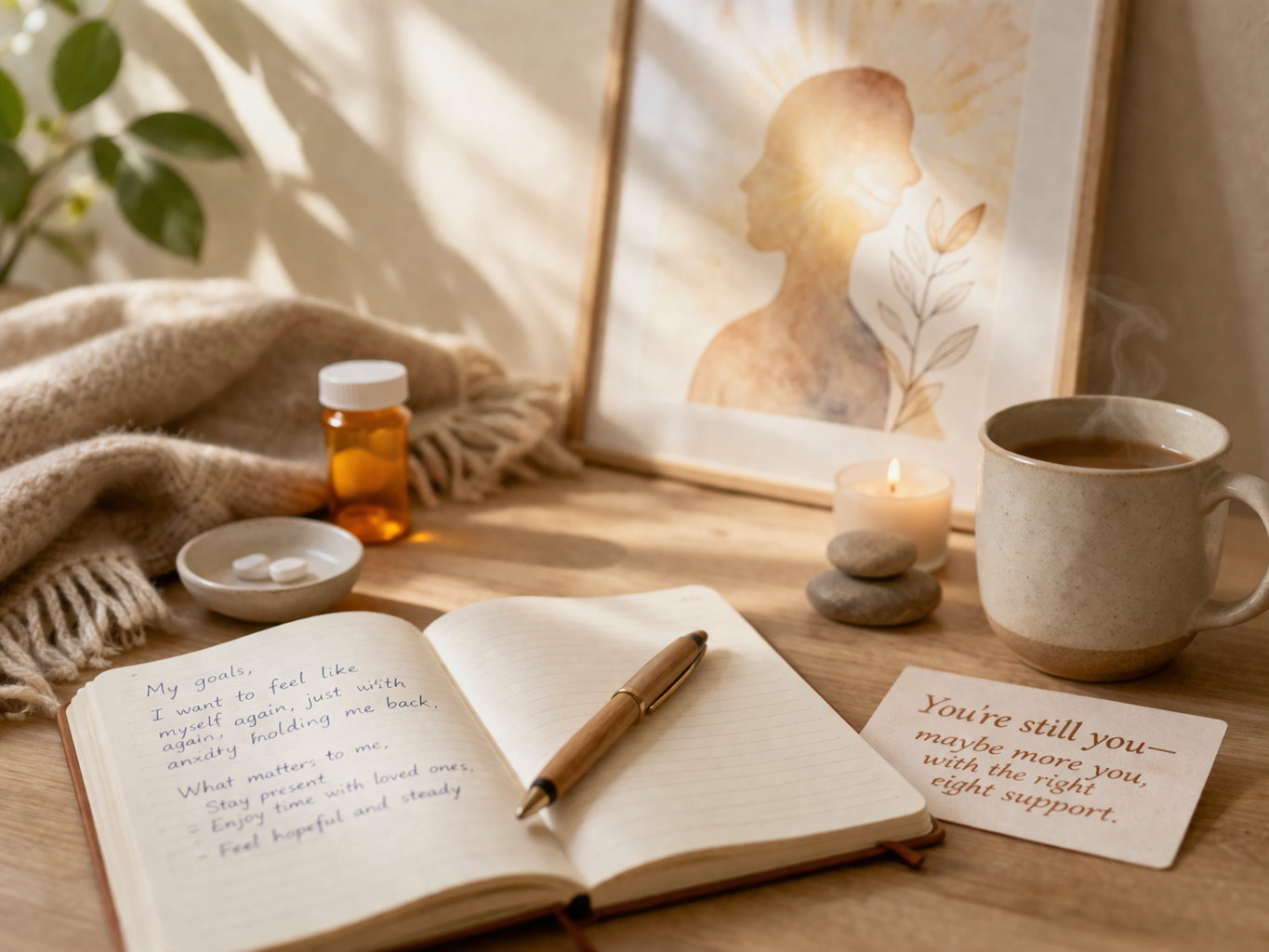
Sometimes mental health struggles feel like a fog or weight that makes it hard to express who you really are. Anxiety may make you overly cautious, depression may flatten emotions, and ADHD may make you scattered. Medication doesn’t take away personality; it can help you shine more clearly. Psychologists describe this as “restoring access to yourself,” letting you engage in life with more energy, focus, and emotional balance.

Side Effects Don’t Equal Personality Change

Some medications have side effects – like feeling sleepy, jittery, or emotionally flat at first. This can feel strange and make you question if it’s “changing you.” Usually, side effects fade or can be adjusted with your doctor. The important distinction: side effects are temporary reactions, not a fundamental personality rewrite.

Your Brain is Flexible

Psychology and neuroscience show the brain is highly adaptable – this is called neuroplasticity. Medication can create conditions for positive changes like better mood regulation, reduced anxiety, or improved focus. Pairing medication with therapy, lifestyle changes, and coping strategies enhances these effects. Medication is a tool, not a replacement for the work you do to grow and heal.
Developing Self-Compassion

Involving Yourself in the Process Matters

Feeling in control is key. Being part of decisions – talking to your doctor about goals, side effects, and desired outcomes – ensures medication supports you, not overwhelms you. Tracking how you feel over time helps distinguish helpful effects from unwanted changes.

The Big Picture

Taking medication doesn’t erase who you are – it helps you show up as yourself more fully. Your quirks, humor, and core personality remain intact, and in many cases, medication makes it easier to live in alignment with your true self. Pair it with self-care, therapy, and support, and you’re giving your brain the best chance to help you thrive. Being yourself doesn’t mean being perfect; it means having the tools and clarity to navigate life while staying true to your values, passions, and personality. Medication can be one of those tools.

If you’re considering medication or have questions about how it may impact you, our team at Orchard Mental Health Group is here to help. We’ll work with you to find an approach that supports your goals – so you can feel more like yourself, not less.

Follow us for more wellness content!

More Blog Posts

Will I Still Be Myself When I Take Medication

Will I Still Be Myself When I Take Medication

Home » Blog » Will I Still Be Myself When I Take MedicationWill I Still Be Myself When I Take Medication? Answers to Common Concerns March 24, 2026 | Sasha Hileman, Psy.D. | 3 min. readIf you’re considering medication for mental health - whether anxiety, depression,...

read more
Personality Tests – Are They Legit?

Personality Tests – Are They Legit?

Personality tests are everywhere—but not all of them are scientifically sound. Learn which ones hold up under research, which are just for fun, and how therapists actually use personality in practice.

read more

Why Politics Feels So Exhausting – and What You Can Do About It

Home » Blog » Why Politics Feels So Exhausting – and What You Can Do About It

Why Politics Feels So Exhausting – and What You Can Do About It

January 27, 2026 | Sasha Hileman, Psy.D. | 3 min. read

Developing Self-Compassion

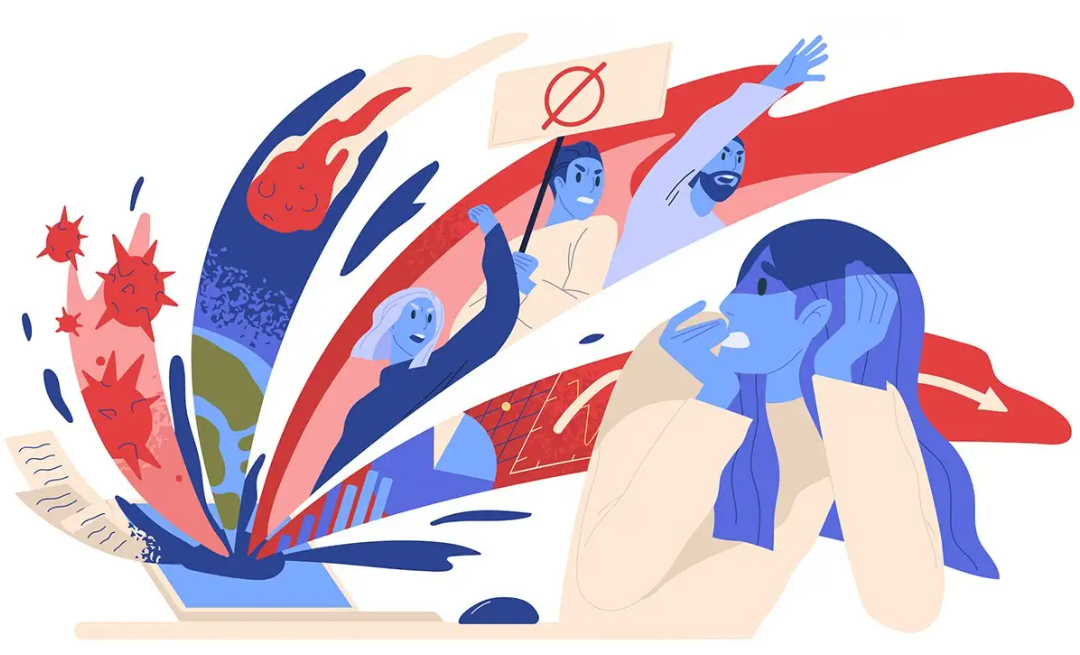
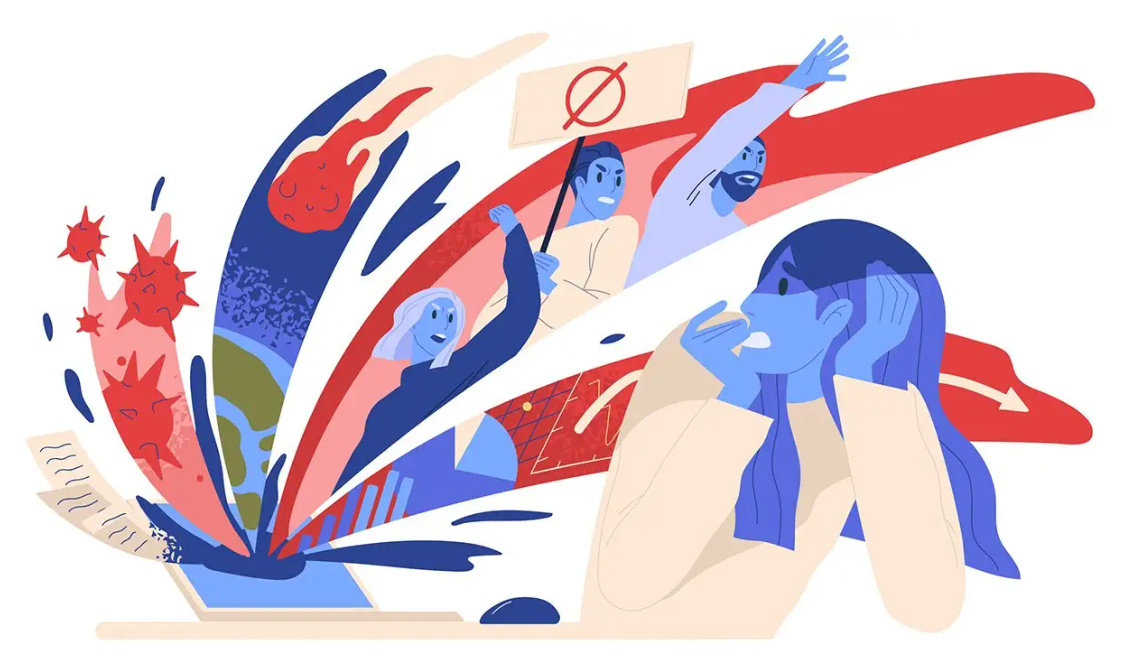
You open your phone to check the news. Minutes later, you feel tense, angry, and emotionally drained.

Politics and how we consume it has changed. Social media and 24/7 news cycles are optimized for urgency and outrage. When the brain is repeatedly exposed to conflict-heavy content, the nervous system remains in a state of threat detection, even while sitting on the couch.

Over time, this contributes to chronic stress, anxiety, and emotional exhaustion.

Why It Hits So Hard

Politics today feels personal. Opinions are framed as moral tests, disagreements as character flaws. This keeps the brain’s fight-or-flight system activated, eroding patience, sleep, and focus.

Young adults are particularly affected. Pressure to stay informed, take positions, and respond publicly can turn civic engagement into emotional overload.

Staying Informed Without Burning Out

Set limits on consumption
Decide when and how long you’ll engage with political content and turn off breaking news alerts.

Curate your sources
Choose factual, measured reporting. Sensationalism increases stress without increasing understanding.

Pause before reacting
Not every post requires a response. Protect your emotional energy.

Channel energy into action
Volunteering or community involvement restores agency and reduces helplessness.

Protect relationships
Connection matters more than arguments. Shared humanity buffers stress.

Caring about the world doesn’t require constant vigilance. Balance isn’t apathy, it’s resilience.

If political stress feels overwhelming, Orchard Mental Health offers support for managing anxiety, emotional reactivity, and burnout.

Follow us for more wellness content!

More Blog Posts

Will I Still Be Myself When I Take Medication

Will I Still Be Myself When I Take Medication

Home » Blog » Will I Still Be Myself When I Take MedicationWill I Still Be Myself When I Take Medication? Answers to Common Concerns March 24, 2026 | Sasha Hileman, Psy.D. | 3 min. readIf you’re considering medication for mental health - whether anxiety, depression,...

read more

Personality Tests – Are They Legit?

Home » Blog » Personality Tests – Are They Legit?

Personality Tests – Are They Legit?

January 20, 2026 | Sasha Hileman, Psy.D. | 5 min. read

Developing Self-Compassion

It’s almost impossible to scroll the internet or social media without seeing a personality test promising to reveal “who you really are.” From the Myers-Briggs to Enneagram types to Buzzfeed-style quizzes, these tools are everywhere. But how much science is actually behind them?

The appeal of personality tests

Personality tests are fun because they offer language to describe ourselves. Humans love
patterns, and tests can give us a sense of identity, belonging (“I’m such an INFJ!”), and even guidance on relationships or careers. They feel validating—like someone sees you clearly.

The problem with popular tests

Not all tests are created equal. The Myers-Briggs Type Indicator (MBTI), one of the most
well-known, divides people into 16 types based on four categories. While entertaining, research shows it’s not particularly reliable: about 50% of people get a different result when retested weeks later. Psychologists also note it lacks predictive power—meaning it doesn’t consistently forecast job performance, relationship satisfaction, or mental health outcomes.

So if MBTI isn’t cutting it, what actually holds up under scientific scrutiny?

Developing Self-Compassion

What the science supports

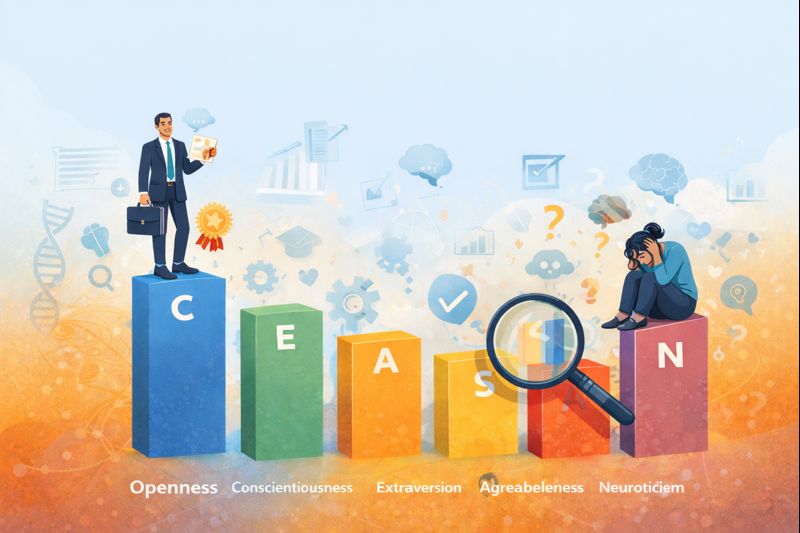
The Big Five personality traits (openness, conscientiousness, extraversion, agreeableness, and neuroticism) have decades of research backing them. The Big Five shows strong reliability (scores are stable over time) and validity (they predict real-life outcomes). For instance, conscientiousness is linked to higher academic and career success, while high neuroticism is associated with anxiety and depression risk.

Personality and therapy

In therapy, we often explore personality not through labels but through patterns—how you respond to stress, connect with others, and make meaning from your experiences. Evidence-based assessments can clarify these patterns in a grounded, scientific way, supporting personal insight and growth rather than boxing you into a category.

So, are tests legit?

Entertainment-focused tests (MBTI, Enneagram, online quizzes) are fun but not scientifically rigorous—think of them as conversation starters, not diagnostic tools. Big Five and clinical assessments (like the Minnesota Multiphasic Personality Inventory) are backed by research and used in psychology, education, and career counseling.

How to use them wisely

Take casual tests with a grain of salt—they might spark reflection but don’t define you. Look for tests developed by researchers if you want accuracy; many free Big Five inventories exist online. Remember: personality is complex. No test can capture every nuance of who you are.

Overall, personality tests can be fun and even helpful for self-reflection, but only a handful are scientifically solid. If you enjoy them, great—just don’t let them box you in. Real growth comes from curiosity, self-awareness, and experiences, not from fitting neatly into a four-letter type.

Curious about what evidence-based personality tools can actually tell you? Reach out to Orchard Mental Health Group—we’d love to help you explore these insights in a meaningful, science-backed way.

Follow us for more wellness content!

More Blog Posts

Will I Still Be Myself When I Take Medication

Will I Still Be Myself When I Take Medication

Home » Blog » Will I Still Be Myself When I Take MedicationWill I Still Be Myself When I Take Medication? Answers to Common Concerns March 24, 2026 | Sasha Hileman, Psy.D. | 3 min. readIf you’re considering medication for mental health - whether anxiety, depression,...

read more
Personality Tests – Are They Legit?

Personality Tests – Are They Legit?

Personality tests are everywhere—but not all of them are scientifically sound. Learn which ones hold up under research, which are just for fun, and how therapists actually use personality in practice.

read more

The Post-Holiday Slump: Why You Feel “Off” After the Festivities End

Home » Blog » The Post-Holiday Slump: Why You Feel “Off” After the Festivities End

The Post-Holiday Slump: Why You Feel “Off” After the Festivities End

January 6, 2026 | Sasha Hileman, Psy.D. | 5 min. read

Developing Self-Compassion

You made it through the holidays. The gatherings are over, the decorations are coming down, and life is supposed to “go back to normal.” So why do so many people feel flat, sad, unmotivated, or emotionally drained once it’s all over?

If you’re experiencing a post-holiday slump, you’re definitely not alone. There are real psychological and biological reasons this time of year feels harder than expected.

The emotional whiplash effect

Holidays create a temporary bubble. Even if they’re stressful, they still bring structure, anticipation, social connection, and a sense of meaning. Your brain gets regular hits of dopamine (anticipation), oxytocin (connection), and novelty. When that bubble pops in January, your nervous system notices.

The sudden shift from stimulation to routine can feel like emotional whiplash. One day your calendar is full of plans, traditions, and food; the next day it’s emails, chores, and dark evenings. That contrast alone can trigger a sense of emptiness or low mood.

Letdown after “survival mode”

Many people don’t realize they’ve been running on adrenaline until it’s gone. During the holidays, you may push through stress, family dynamics, travel, or grief by sheer momentum. Once it’s over, your body finally exhales and exhaustion rushes in. This is your nervous system coming out of survival mode.

Developing Self-Compassion

Loss of structure and meaning

Holidays provide built-in rituals and roles: host, guest, giver, planner. When those disappear, people often feel untethered. Humans thrive on rhythm and purpose, and January can feel strangely empty without them. This is especially true for people who live alone, are grieving, or used the holidays as a rare time of connection.

Seasonal and biological factors

Shorter days and less sunlight affect serotonin and melatonin regulation, which can impact mood, sleep, and energy. Even people without Seasonal Affective Disorder (SAD) can feel more sluggish, foggy, or emotionally sensitive during winter. Add post-holiday sugar crashes, disrupted sleep, and financial stress and you have a perfect storm.

The pressure to “start fresh”

Ironically, the cultural push to be energized, motivated, and goal-oriented in January can make the slump worse. If you feel low while everyone else is talking about “new year, new me,” it’s easy to turn normal emotional recovery into self-criticism.

Developing Self-Compassion

How to support yourself through the slump

Instead of trying to power through or fix yourself, focus on gentle re-regulation:

  • Normalize rest. You don’t need to optimize immediately. Recovery is productive.
  • Rebuild small rituals. Morning coffee walks, weekly check-ins with a friend, or Sunday routines. Structure soothes the brain.
  • Increase light exposure. Natural sunlight or a light box can improve mood and energy.
  • Lower expectations. January is for recalibration, not reinvention.
  • Name your feelings. Sadness, relief, grief, and numbness can all coexist after the holidays.

If motivation feels impossible, start with care, not discipline.

When to seek extra support

If the slump lasts more than a few weeks, interferes with daily functioning, or starts to feel heavy, hopeless, or isolating, it may be more than a temporary dip. Therapy can help you unpack what the holidays stirred up, regulate your nervous system, and create a steadier emotional rhythm moving forward.

If you’re struggling to shake the post-holiday fog or want support navigating this transition, reaching out to a professional at Orchard Mental Health Group may make a meaningful difference. You don’t have to wait until things feel unbearable to get support. 

Follow us for more wellness content!

More Blog Posts

Will I Still Be Myself When I Take Medication

Will I Still Be Myself When I Take Medication

Home » Blog » Will I Still Be Myself When I Take MedicationWill I Still Be Myself When I Take Medication? Answers to Common Concerns March 24, 2026 | Sasha Hileman, Psy.D. | 3 min. readIf you’re considering medication for mental health - whether anxiety, depression,...

read more
Personality Tests – Are They Legit?

Personality Tests – Are They Legit?

Personality tests are everywhere—but not all of them are scientifically sound. Learn which ones hold up under research, which are just for fun, and how therapists actually use personality in practice.

read more

Why New Year’s Resolutions Fail – and How to Make Them Stick

Home » Blog » Why New Year’s Resolutions Fail – and How to Make Them Stick

Why New Year’s Resolutions Fail – and How to Make Them Stick

January 6, 2026 | Sasha Hileman, Psy.D. | 5 min. read

Developing Self-Compassion

As the clock strikes midnight on New Year’s Eve, millions of people make big promises to themselves: lose weight, exercise more, quit bad habits. But by February, most resolutions have already fallen by the wayside. So why do they fail so quickly, and how can we actually make them stick? Let’s break it down using some simple psychology and practical tips.

One big reason resolutions fail is that they’re often too vague. “Get healthy” sounds inspiring, but what does it actually mean? Psychologist Edwin Locke’s research on goal-setting shows that clear, specific goals work best. That’s where SMART goals come in—Specific, Measurable, Achievable, Relevant, and Time-bound. Instead of “exercise more,” try something like: “Walk 30 minutes a day, five days a week, starting January 1.” When your goals are clear, your brain gets little dopamine hits with each milestone, which makes it easier to stick with.

Overdoing it is another common problem. Many of us underestimate how much effort a goal really takes, and then get burned out. This is called the “planning fallacy”—we’re overly optimistic about what we can accomplish and forget about obstacles. A simple fix: start small. James Clear, author of Atomic Habits, suggests building micro-habits. If your goal is to read more, start with one page a day. Tiny wins stack up, especially when you link them to something you already do, like reading right after brushing your teeth.

Motivation matters too. Goals based on pressure from society or wanting a “new you” tend to fade fast. Research on self-determination theory shows that lasting change comes from goals that align with your values and give you a sense of autonomy, competence, and connection. Ask yourself: Why does this goal matter to me? For example, if fitness helps you have more energy to play with your kids, you’re more likely to stick with it. Journaling about your motivations can really help make them stick.

Developing Self-Compassion

Emotions play a role as well. Many people give up after one slip-up because they think, “I messed up, so why bother?” That’s all-or-nothing thinking, and it just triggers shame and guilt. Self-compassion is key here—treat yourself like you would a friend. One practical tool is “implementation intentions”: If you miss a workout, have a backup plan, like a 10-minute stretch. Research shows this kind of “if-then” planning can double or even triple your chances of success.

Accountability and your environment make a big difference too. Share your goals with friends or join a group—it helps keep you on track. You can also tweak your environment to make good habits easier: stock healthy snacks, put running shoes by the door, or remove temptations. Little changes can make a big difference.

Finally, review your progress regularly. Track what’s working, adjust what’s not, and celebrate wins. Carol Dweck’s work on the growth mindset reminds us that setbacks are opportunities to learn, not failures.

So how do you make resolutions stick? Set SMART goals, start small, align them with your values, plan for obstacles, seek support, and check in on your progress. Change is a marathon, not a sprint. And if old habits keep popping up, therapy or coaching can help tackle underlying obstacles like stress or anxiety.

If you’re struggling to stick with your resolutions or make meaningful changes, reach out to a mental health professional at Orchard Mental Health Group. With the right support, you can set goals that really last—and feel good while doing it.

Follow us for more wellness content!

More Blog Posts

Will I Still Be Myself When I Take Medication

Will I Still Be Myself When I Take Medication

Home » Blog » Will I Still Be Myself When I Take MedicationWill I Still Be Myself When I Take Medication? Answers to Common Concerns March 24, 2026 | Sasha Hileman, Psy.D. | 3 min. readIf you’re considering medication for mental health - whether anxiety, depression,...

read more
Personality Tests – Are They Legit?

Personality Tests – Are They Legit?

Personality tests are everywhere—but not all of them are scientifically sound. Learn which ones hold up under research, which are just for fun, and how therapists actually use personality in practice.

read more